
MND Artwork
Painting Without Brushes
Painting Hope by Dr Rick Nelms
Dr Rick Nelms is a Biologist, Educator, MND Advocate, Living on the Autistic Spectrum, and Artist Living with Motor Neurone Disease.
‘Painting Without Brushes’ because I can’t control a brush. After diagnosis and retirement emerged Rick the artist, determined to remain positive no matter how hard it got, painting non-stop, using a smartphone, a tablet or PC.
‘Painting Hope’ because research gives hope of a future without neurodegenerative diseases. ‘Painting Hope’ also refers to my Christian faith.
February 2026
Lay Summary – The experiences of people with MND, and their caregivers, living with cough and secretion issues
A painting by Rick Nelms created digitally using a n-Abler Pro mouse allowing a public domain photo of a doctor to be cut out from the original background using GIMP software. Rick took a blank canvas and added a frame for the smartboard on a Professor Dame Pamela Shaw inspired, SITraN-like, turquoise wall. Rick added logos to make clear the affiliations of the trainer and added labels on the imaginary screen using words from the paper and Lay Summary. Next, Rick slanted the wall so it would look more realistic, raised the ceiling to allow the addition of the window with trees outside and sunlight shining through the branches as a symbol of hope. Finally, Rick used software to make the image larger without making it fuzzy and painted it using Corel Painter, with a modified brush originally called ‘Velocity Pop’ using the autoclone function that gives the best compromise between accurately reproducing human faces and also making paintings of words that are legible. The original painting is a lossless png file, A0 size, which is 84.1 cm x 118.9 cm, 9933 x 14043 pixels, which means that it can be projected or printed to large sizes and made into smaller compressed jpeg for use on websites.

Notes from Rick
One key finding of the study was that most participants felt that non-specialist services had poor knowledge of ALS/MND and did not have the skills to support their cough and secretion issues. Therefore, the painting represents a specialist trainer who is fixing this problem.” I imagined her as a teacher or trainer, standing in front of a smartboard or whiteboard, introducing a session developing knowledge and understanding of ALS / MND in a group of non-specialist doctors, speech and language therapists and other medical professionals”
This painting is intended to represent both opportunities for such training: including the initial training of professionals during their university courses, and continuous professional development (CPD), during their careers, when they are already employed in hospitals or in community services including GP surgeries. Training and especially CPD is so important to change the feelings of participants “that non-specialist services had poor knowledge of ALS/MND and did not have the skills to support their cough and secretion issues”
The painting shows a specialist trainer who understands ALS and who is familiar with the research reported on in the paper. We know that this is the case because the image on the screen behind the trainer is modified from the paper itself, and the headings are aligned to the text of the Lay Summary as follows:
Title: ‘Cough and Secretion Management in ALS / MND’ suggesting an introductory part of a session to develop knowledge, understanding and skills, for people who provide non-specialist medical services.
Lay Summary: “Most participants felt that non-specialist services had poor knowledge of ALS and did not have the skills to support their cough and secretion issues.”
Painting: ‘Surviving from Day to Day’
Lay Summary: “Participants said that cough and secretion issues had a big day to day impact including the impact on talking to others and embarrassment of drooling in social situations and avoiding enjoyable activities.”
Painting: ‘The Key Role of Informal Carers’
Lay Summary: “Participants appreciated the caregivers in their support in cough and secretion management. They are often the first responders at home, fixing issues as they happen.”
Painting: ‘Information Provision to Inform Decision Making’
Lay Summary: “Participants said that high quality information helped them to make better decisions about their cough and secretion care,”
Painting: ‘Coordination of Care’
Lay Summary: … specialist ALS care centres were more likely to have teams with the right knowledge and skills which the participants appreciated. However, participants often found it difficult to access care centres due to tiredness and pain from travelling therefore many participants wanted to access specialist care closer to home or remotely. Patients also found it overwhelming and pressuring when coordinating their care as they must juggle multiple treatments and keep their medical team organised.
Painting: ‘Specialist ALS Knowledge and Skills’
Lay Summary: “Most participants felt that non-specialist services had poor knowledge of ALS and did not have the skills to support their cough and secretion issues. Services did not understand the fast development of ALS, meaning that access to support was not always available fast enough. All participants felt that a tool made to support cough and secretion management was much needed and would make a huge difference in their care pathway and patient journey.”
June 2025
Rick has painted four paintings to go with the UK Biobank, sleep abnormalities and ALS-FTSD Lay Summary,
Please click on the paintings to see them in full detail.
‘Activity Monitor’, ‘Insomnia’ and ‘Sleep Apnea’ were painted using my preferred pointillistic style, developed before I started using a computer to paint, all painted using my own configuration of the painting program Corel Painter. ‘
Hypersomnia’ subtitled ‘Too much sleep’, is painted using a different methodology, more akin to oil painting using a fairly broad brush and dabs of paint, inspired by the impressionists.

‘Activity Monitor’ shows one of the distinctive features of the UK Biobank which made it a big step forward from previous longitudinal studies.
A large number of people within the sample group had worn a 3 axis wearable motion detector with SD card storage. This allowed precise quantification of the amount of time actually spent doing exercise and also the amount of time spent in REM and deep sleep.
This breakthrough in data quality is celebrated in the painting ‘Activity Monitor’, showing an ordinary person wearing a three axis activity recording device on their wrist [the red item which looks a little like a digital watch] and stretching prior to their chosen exercise routine. Intentionally no attempt is made to give any clues as to the type of exercise the person is preparing for, since that is not the point.
The point is that the researchers will have had, after the person has worn the activity monitor for seven days, like 83,227 other people involved in the study, a clear picture of both the amount of sleep and the amount of activity of the person. This painting, ‘Activity Monitor’, was inspired by the high quality of the research data on which the study outcomes were based.

‘Insomnia’ is a painting which represents the people within the study who slept for an abnormally short period during each 24 hours.
These people slept for 5 hours or less in each 24 hour day, a figure which caused some surprise to the artist, living as he does with a rare, slowly progressive motor neuron disease, Primary Lateral Sclerosis and has rarely slept for more than five hours in 24, throughout his life, from childhood. It was only late in life that Rick discovered that his sleep pattern was sufficiently unusual to be categorised as abnormal.
The paper and Lay Summary: ‘Sleep problems may be an early sign of or risk factor for amyotrophic lateral sclerosis (ALS) and frontotemporal dementia (FTD)’ identify severe insomnia [less than 5 hours of sleep in 24] as more common in people who go on to develop, or who live with ALS [Amyotrophic Lateral Sclerosis, the commonest Motor Neuron Disease] and / or Frontotemporal Dementia [FTD].

‘Hypersomnia’ [Too much sleep] is a painting which represents the opposite extreme, those people who might typically: go to bed early in an evening, sleep soundly all night, have great difficulty waking and getting up, and often fall asleep during the day, ending up totalling more than 8 hours of sleep per day, sometimes more than 12 or 14 hours of sleep per day.
Sitting for a short time while other members of a photography group took photographs of the interesting architectural and industrial history of the location, the individual depicted in ‘Hypersomnia’ was asleep in moments after sitting down, and had to be awoken by another group member to move on to the next photographic location. Such behaviour is not found in every person who sleeps too much [some just sleep too long every night], but is sufficiently common to make a good painting representing this sleep abnormality.
Once again, the paper and Lay Summary: ‘Sleep problems may be an early sign of or risk factor for amyotrophic lateral sclerosis (ALS) and frontotemporal dementia (FTD)’ identify severe Hypersomnia [more than 8 hours of sleep in 24] as more common in people who go on to develop, or who live with ALS [Amyotrophic Lateral Sclerosis, the commonest Motor Neuron Disease] and / or Frontotemporal Dementia [FTD].

‘Sleep Apnoea’ is another painting with which Rick, as both artist and biologist, has a strong connection. Years ago, Rick had ‘restless legs’ at night, which disturbed his sleep. He went for an overnight sleep study at a local NHS sleep clinic.
The sleep lab consultant was absolutely astonished that although Rick did indeed have restless legs, the main problem was that Rick had severe sleep apnoea, stopping breathing hundreds of times during the night, and waking himself up enough to start breathing again, but not awake enough to be aware of it. The reason that the consultant was so surprised is that upon diagnosis Rick was 1.82 metres tall, weighed under 100 kg and had cycled between 60 and 120 miles a week for the previous 20 years.
The sleep specialist consultant had never seen another patient who fit that description who had sleep apnoea. It is interesting that, years before Rick was diagnosed with the motor neuron disease with which he now lives, sleep apnoea was already a feature of his life. Of course, this does not tell us anything about cause and effect. There is a strong association between sleep apnoea and motor neuron disease, but most people living with sleep apnoea do not go on to develop motor neurone disease.
At this stage we do not know if the association is involved in one thing causing the other, in either direction, or if both are themselves caused by some other third factor. Finding the association is very important because it tells us another group of items on which we need to do further research to work out what is causing what. Rick thinks it is important enough to have painted the self-portrait ‘Sleep Apnoea’ showing him sleeping in a mask which was, until recently, connected to a CPAP machine (Continuous Positive Airway Pressure) which, for many years, successfully treated the symptoms of his sleep apnoea. Rick’s Motor Neuron Disease has now progressed, affecting his breathing more severely at night, so the same mask is now attached to a Non Invasive Ventilator (NIV, also sometimes called Nippy or BIPAP machine).
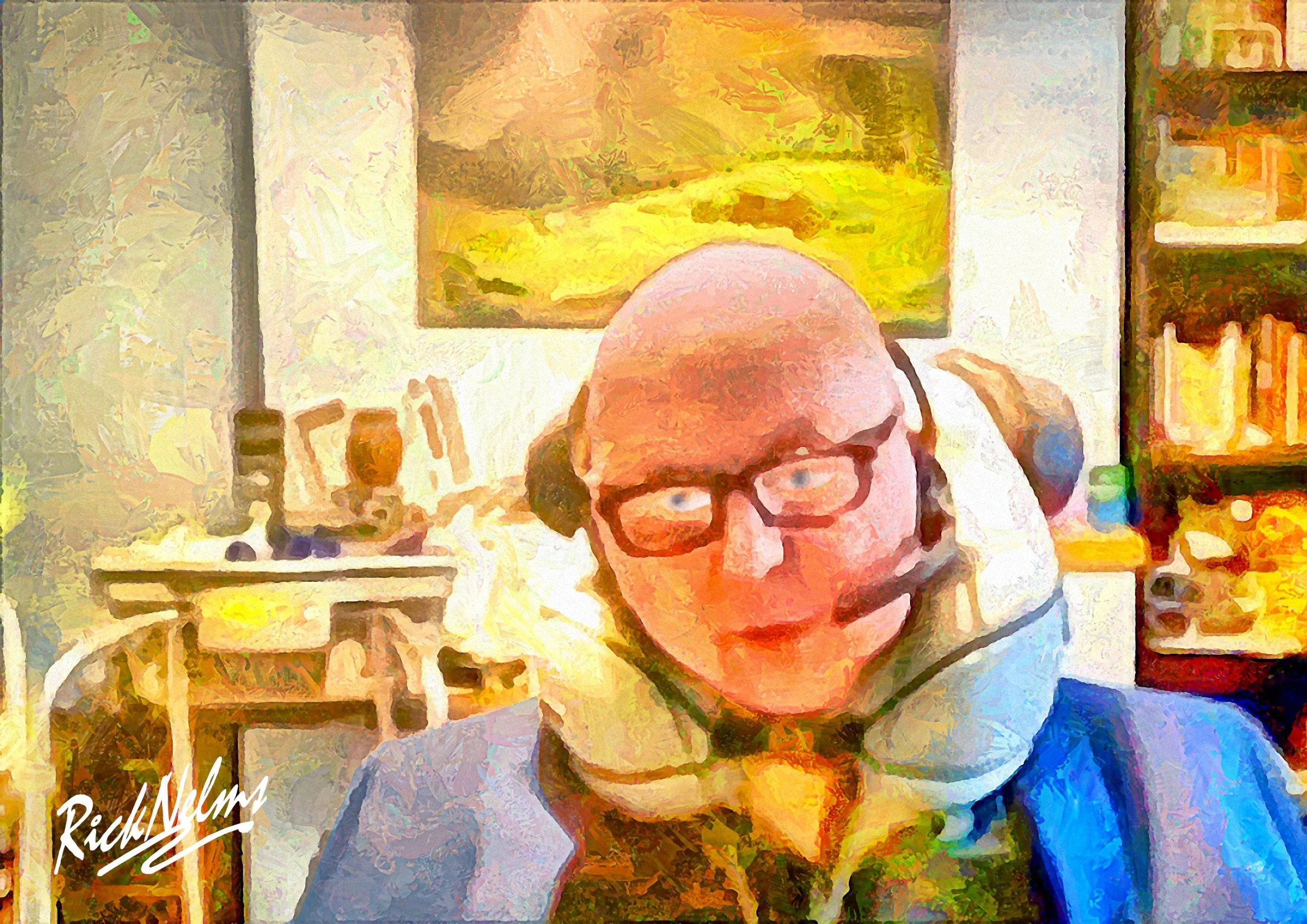
‘Scroggie’
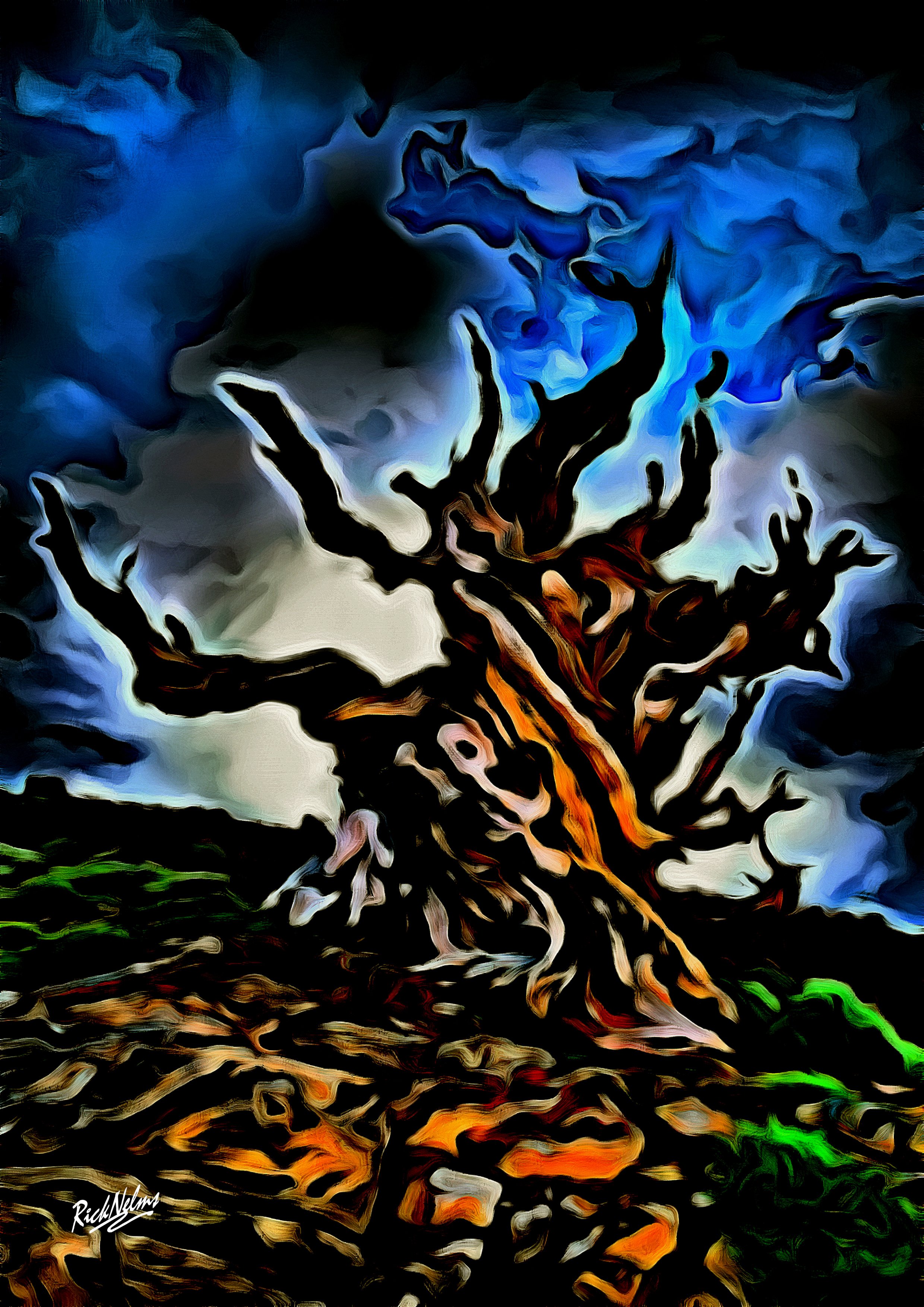
‘Scroggie’. Digital painting using my configuration of PC program Dynamic Auto Painter.
Motor Neurone Diseases, of which ALS (Amyotrophic Lateral Sclerosis) is the most common, can be exhausting and painful, as are many other long-term or life-limiting conditions. Everyone who lives with a motor neurone disease experiences times where pain and exhaustion mean that you just can’t think straight. The painting ‘Scroggie’ is about how this feels. Scroggie is a Scottish word meaning shrivelled, shrunken, stunted or twisted
‘In Memory…’

‘In Memory…’ Digital painting using my configuration of PC program Corel Painter.
We who live with motor neurone diseases, or other life-limiting conditions, make short, intense friendships because we know that time is limited. This painting was painted after the death of one of my friends. The elegant gull gliding effortlessly celebrates the elegance of my friend. The explosion of stormy waves over a rocky ledge recalls that my friend’s life was turned upside down and ultimately ended by a life-limiting condition. The rainbow refers to my belief that God makes promises and keeps them. The light breaking through the storm clouds is about my belief that Jesus is light of the word, and that my friend is now at peace; ‘breathing feely and singing loudly’ as another friend so beautifully put it
‘My Shrinking World’

‘My Shrinking World’ was painted using my configurations of PC program Dynamic Auto Painter.
Before I developed the rare MND with which I live, I used to travel for holidays and work across the world. I was a very active man, so for my summer holiday I was re-roofing a French watermill at the top left. At top centre, I was trying to take the compost out to give to the chickens on my allotment, but had fallen and face-planted the hedge. My world had shrunk, and though I did manage to get to Greece with my wife before diagnosis, everything was more difficult. At top right, I am in my powerchair, painting using a computer because I cannot hold a brush, with my legs lifted up under the desk to try and minimise fluid accumulation on my lower legs (lymphedema). I can no longer drive and my wife takes me anywhere we wish to go in our wheelchair accessible van, but we cannot travel too far because I get too fatigued. My world has shrunk. However, I use the internet for work with the International Alliance of MND/ALS Associations and I am determined to be positive and do everything I can to help in the effort to rid the world of neurodegenerative diseases and to support my friends who live with life-limiting conditions.
‘Good days and Bad days’
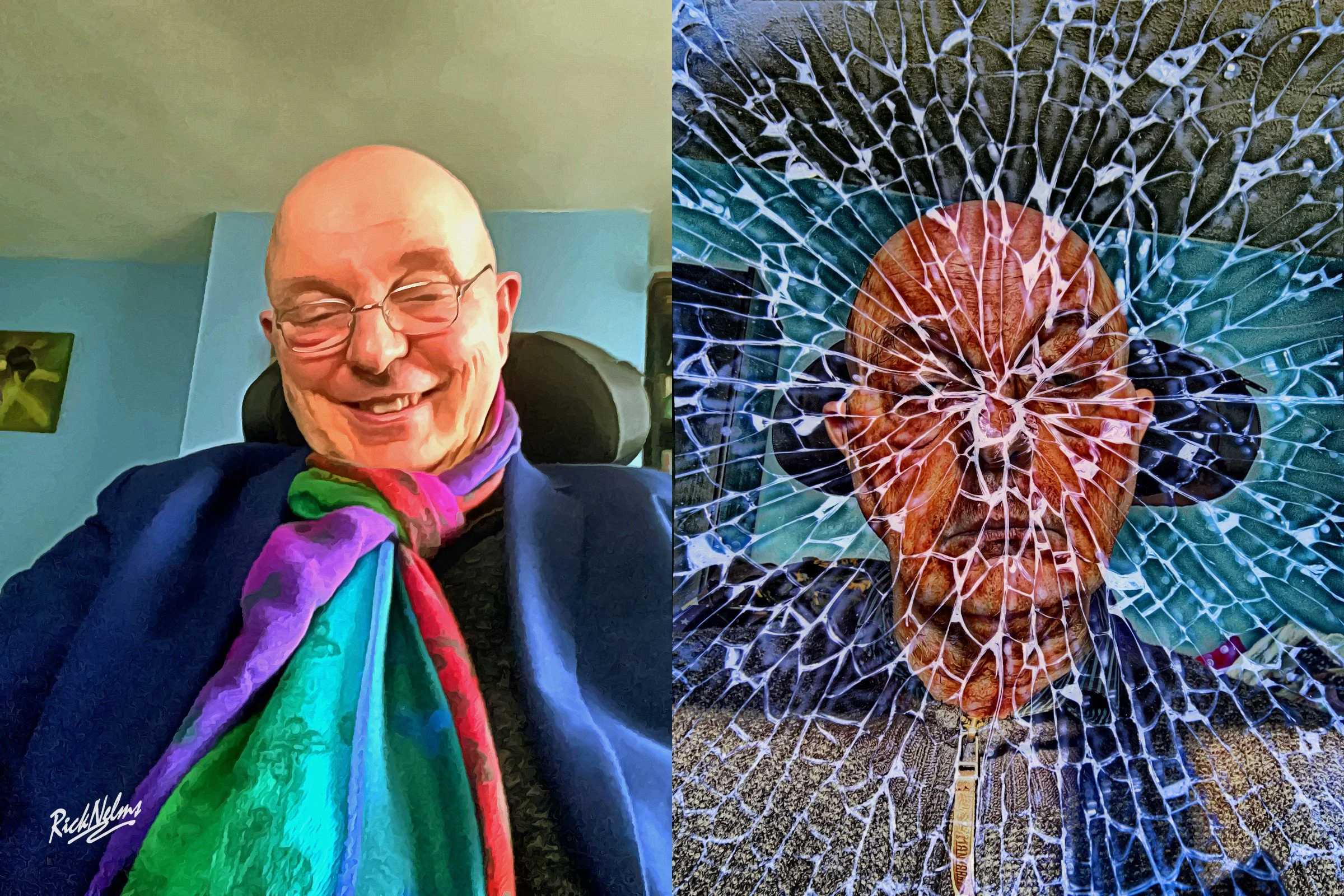
‘Good days and Bad days’
“Is one painting made from two different selfies painted separately using my own sketch configurations of Dynamic Auto Painter Pro.”
“Retaining control, positive thinking and happiness all improve outcomes. Clinicians and researchers use outcomes to mean how well you live and how long you live. Living with MND or any other life-limiting condition is all about trying to make both your own life and the lives of the people who love you and those who care for you, better, more enjoyable, less unpleasant, less horrible.”
“My experience is that positive thinking, purpose, finding the good in bad situations, humour, having fun and laughter, looking after your mental health, retaining control, never giving in – on the really bad days, decide you are going to cry because that way you are still in control, and once you have had a good weep, mop yourself up, and get back to being positive and helping others”
“Live well, live long – love, beauty and peace and never, ever giving in to the condition all improve outcomes.”
‘Sue, without whom none of this would be possible’
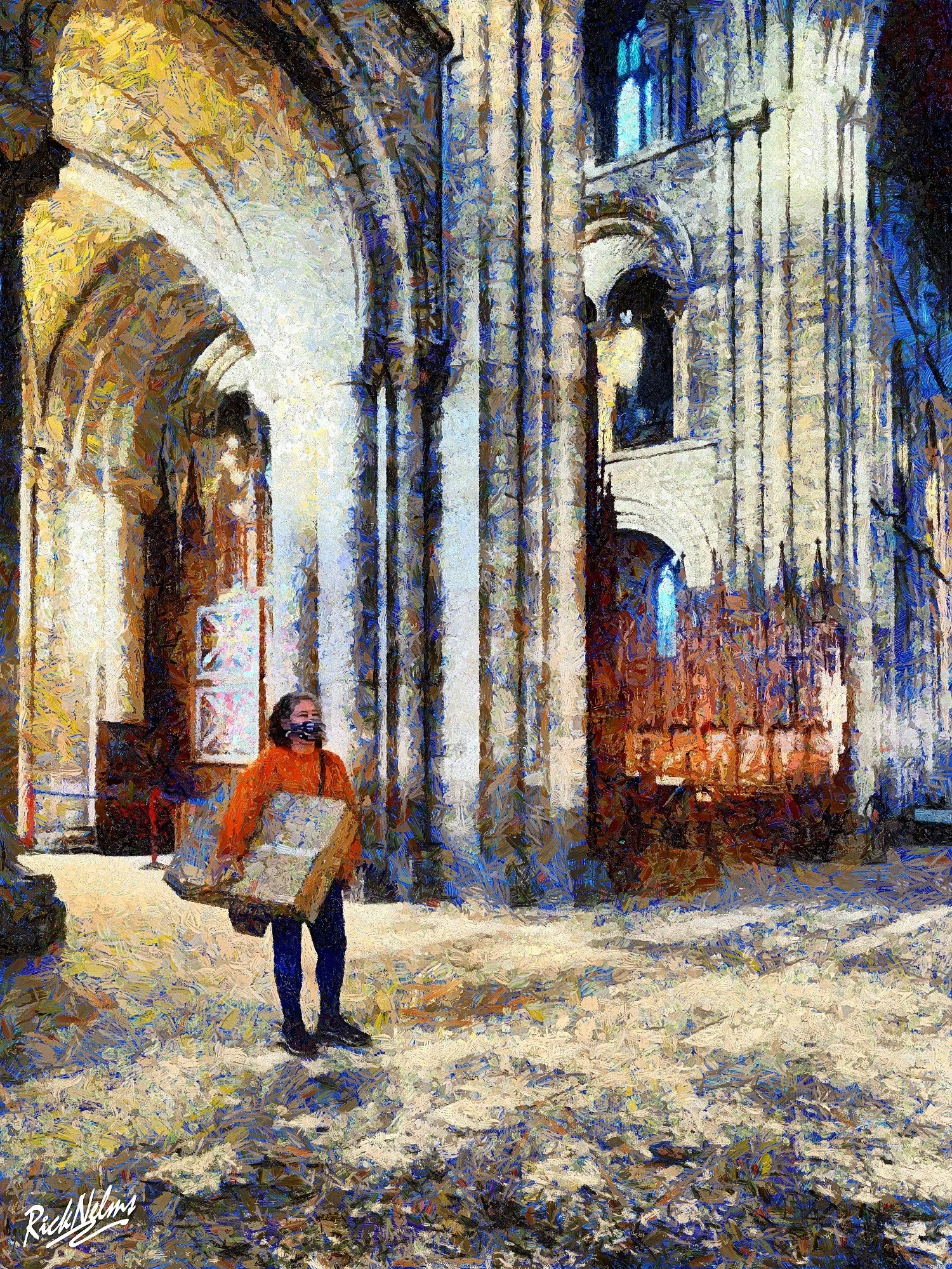
‘Sue, without whom none of this would be possible’
‘Sue, without whom none of this would be possible… is a celebration of enduring love… Sue looking thoughtfully down the immensely long nave of Peterborough Cathedral. Probably the best painting I have ever made and certainly our favourite’
Artwork inspired by our lay summaries
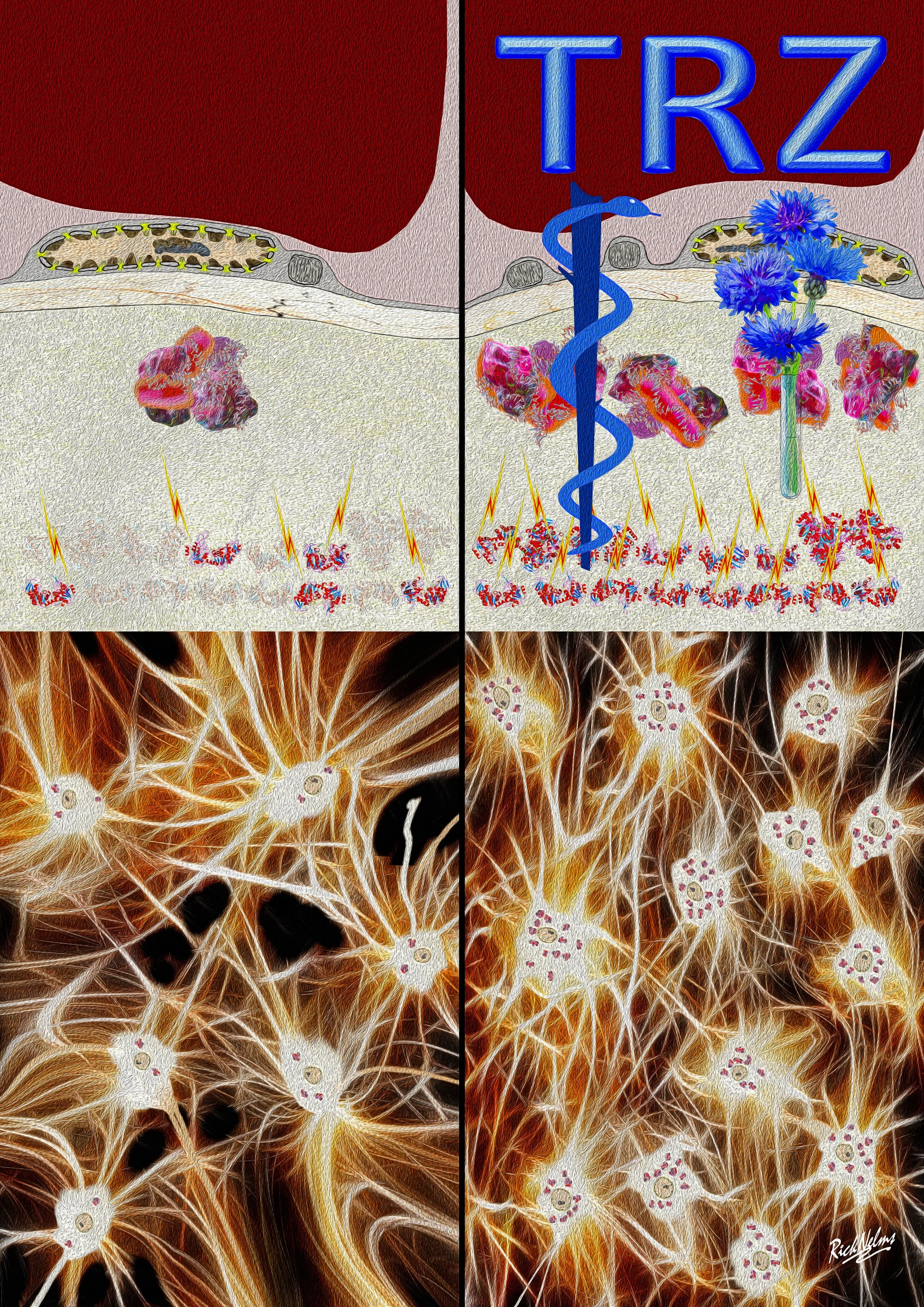
We set Rick the challenge of creating art from one of our lay summaries. Rick chose a summary written by Dr Alannah Mole focussed on a drug called terazosin, which has shown therapeutic potential in motor neuron disease. You can download this summary by clicking the button below.
Quote from Rick
“My word this has been an adventure. It has required a complete reinvention of the way that I work. I normally start with a completely clear picture in my head and the ‘job’ is then to persuade the computer to produce as exact a replica of that as possible.
In this case I had not the faintest notion of what the finished product would look like, nor any idea how, or even if, it were possible to tell the story without either recourse to words in the painting as so much modern meme art does or complex written explanations…However, after an enormous struggle and more versions that I can realistically describe, I have, I think, managed to thread a needle through the liminal space between those modes of art”
‘Below-Imagining terazosin rescuing motor neurones in MND’
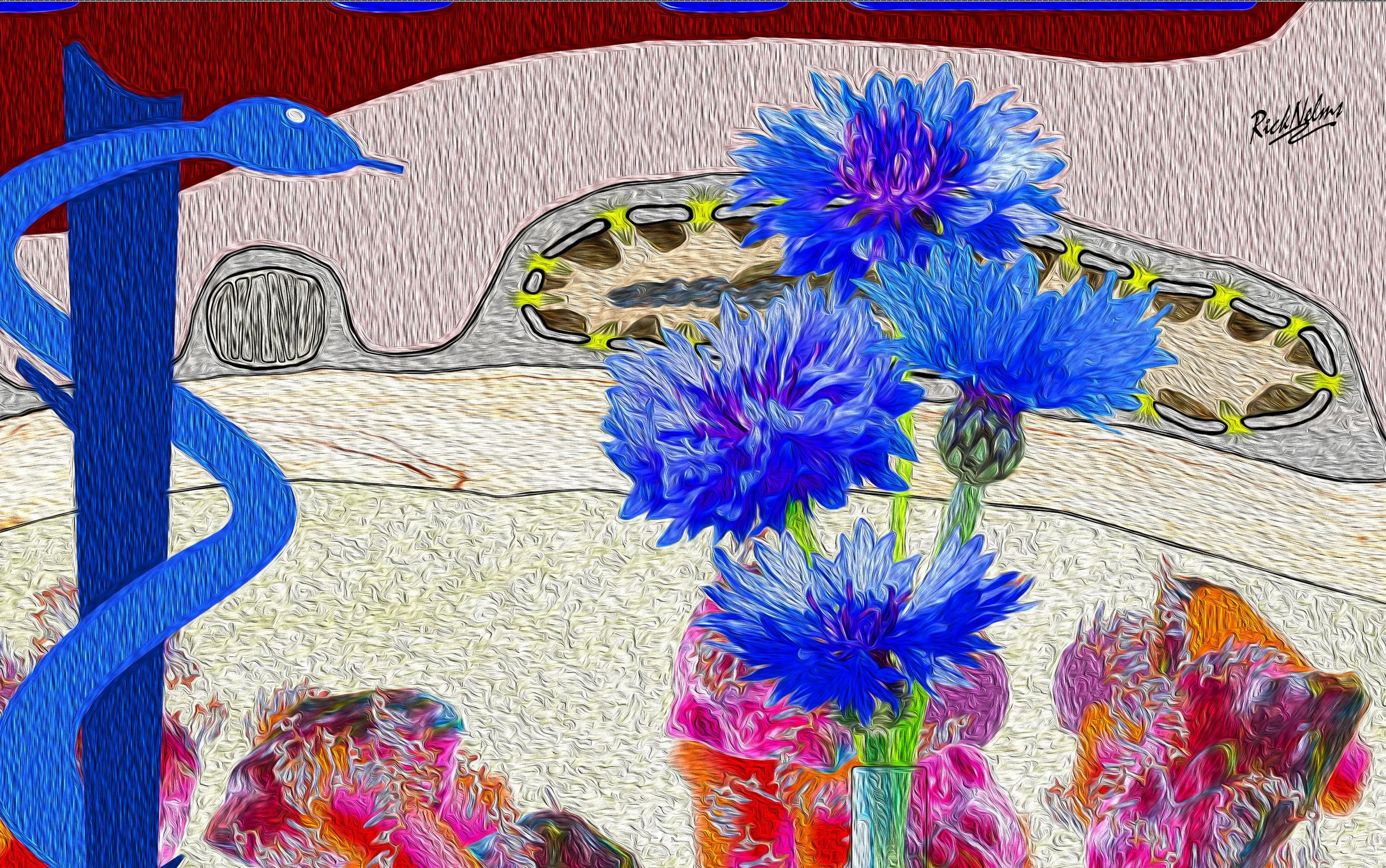
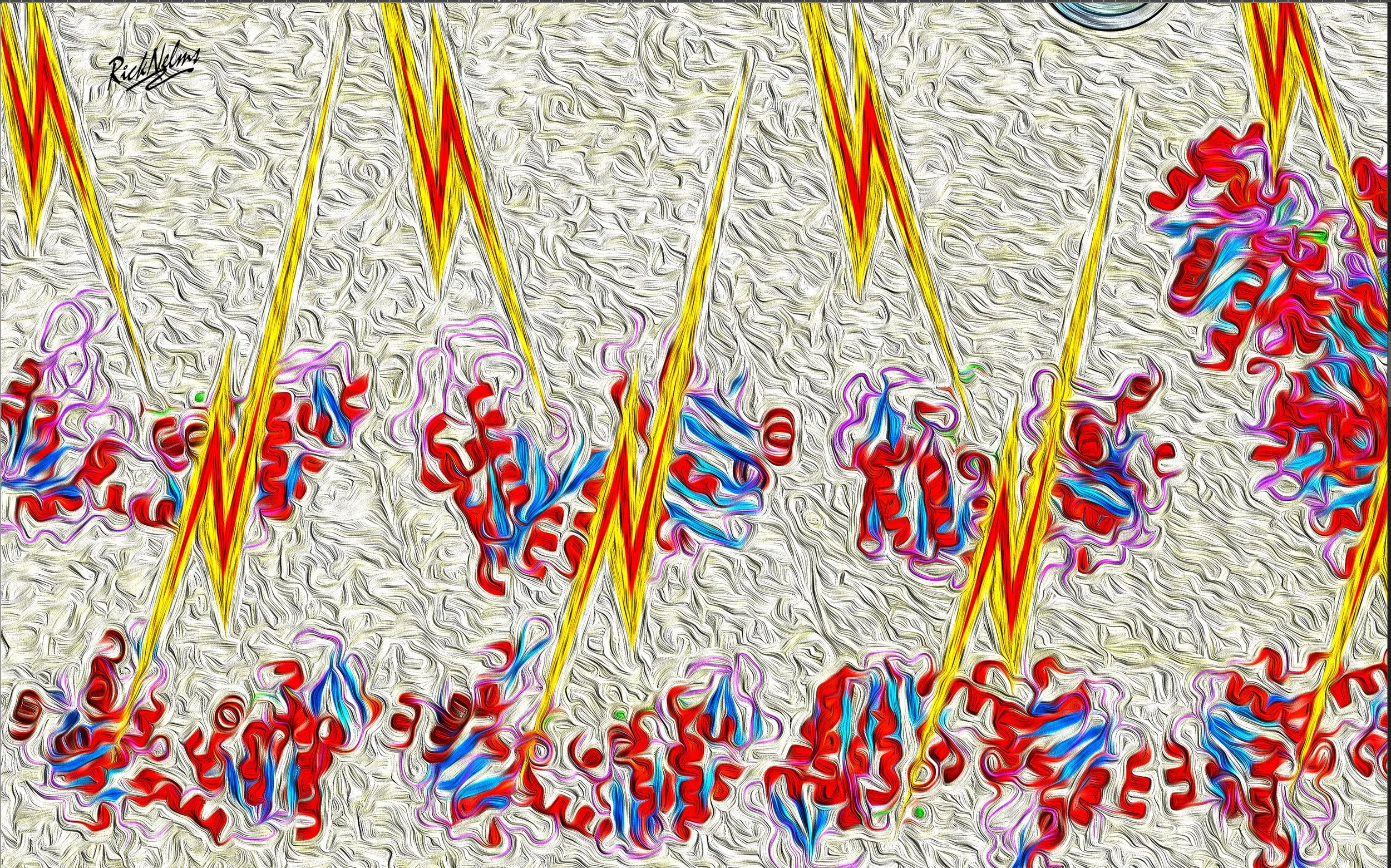
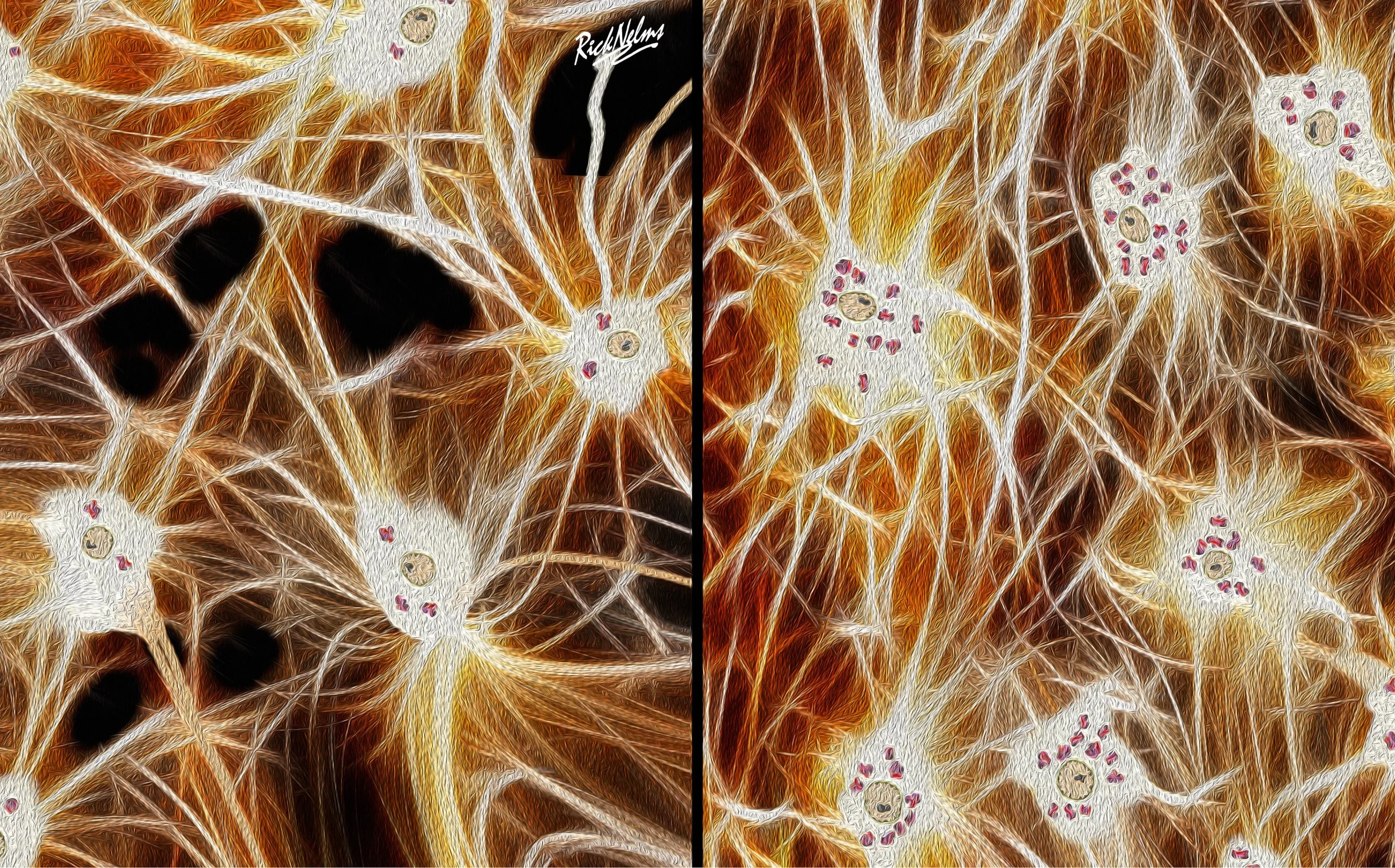
The Hot Summary: ‘Repurposed drug, terazosin, shows therapeutic potential in motor neuron disease,’ imagined, visualized and painted in the preview painting: ‘Imagining terazosin rescuing motor neurones in MND’. The pdf key (available via the button under the painting) contains an illustration of the painting using words mainly from the Hot Summary… The top half shows a much enlarged, simplified view of part of a blood capillary, the blood-brain-barrier and a motor neurone cell body, whereas the bottom half shows a wider view of several motor neurone cell bodies. It is a work of imagination based firmly in the science represented by the Paper and the Hot Summary, but it does not represent the situation now, it imagines what the situation might be if the potential is successfully realised and the drug successfully translated into a therapeutic for ALS and other forms of MND.’
Rick’s latest artwork accompanies the lay summary ‘Changes in blood vessel cell activity take place before symptoms start in Amyotrophic Lateral Sclerosis’.
He says:
“I really enjoyed doing this one, although it represented a considerable challenge because it contains the basement membrane for a cell type that is never mentioned in the lay summary and thus it appears to give the endothelial cells of the capillary wall a basement membrane (although one of the distinctive features of endothelium is precisely that it lacks a basement membrane). The missing cell type is, of course, the mural cell, about which I can now write with confidence after having researched it thoroughly.
One of the features of brain and nervous system biology which never ceases to amaze me is the sheer rate of discovery of new layers of complexity, not least in the vascular system, where such things as perivascular fibroblasts and spaces, and mural cells were a voyage of discovery for me at any rate. I have begun the key with a future perspective which is fundamental to the painting as a whole as I think that this is one of the most encouraging pieces of research which I have come across, taken in the context of the flurry of ongoing drug trials.”

Rick has also painted ‘I Am Not Hungry’ based on the lay summary ‘Appetite control, motor neurone disease & its impact’.
Speaking about it, he said:
“I decided to use pizza as the food in the painting and that naturally suggested Napoli as a backdrop. The picture of me on the left is real (I was 116 kg at the time) but I have augmented the double chin somewhat! The one on the right is based on the one behind the smashed glass in ‘good days, bad days’, when I was about 100 kg (stable at 105 these days) but then I set about it… based largely on my recollection of my grandfather who, aged 79 essentially decided not to eat.”

Rick’s latest artwork (May 2024) is based on our lay summary into research on the emotional challenges of MND visualised as a storm over the ocean.
You can see it in detail, and read more about his inspiration, here >>
