
A lay summary by Dr Amy Keerie, reviewed by Dr Jon Wood and an MND lay panel
Background:
A change in the C9ORF72 gene is the most common genetic cause of Amyotrophic Lateral Sclerosis (ALS) and frontal temporal dementia (FTD), both of which are neurodegenerative diseases with limited treatment options and currently no cure. The change is found in the DNA genetic code (or instruction manual) of the C9ORF72 gene and is formed of a repeat of 6 building blocks that in healthy individuals may be repeated up to 24 times, however patients usually have hundreds or thousands of these repeats.
The repeat has a few ways of causing problems in cells which ultimately leads to the disease in patients. Firstly, the repeat within the code, stops the production of a fully functional C9ORF72 protein within the cell, leading to loss of its function. Secondly, the DNA instructions containing the repeat get copied into another form, known as RNA, that instructs the production of unwanted proteins that have no function, called dipeptide repeats. Both the RNA and dipeptide repeat proteins created from the DNA repeats can accumulate in cells, leading to their death.
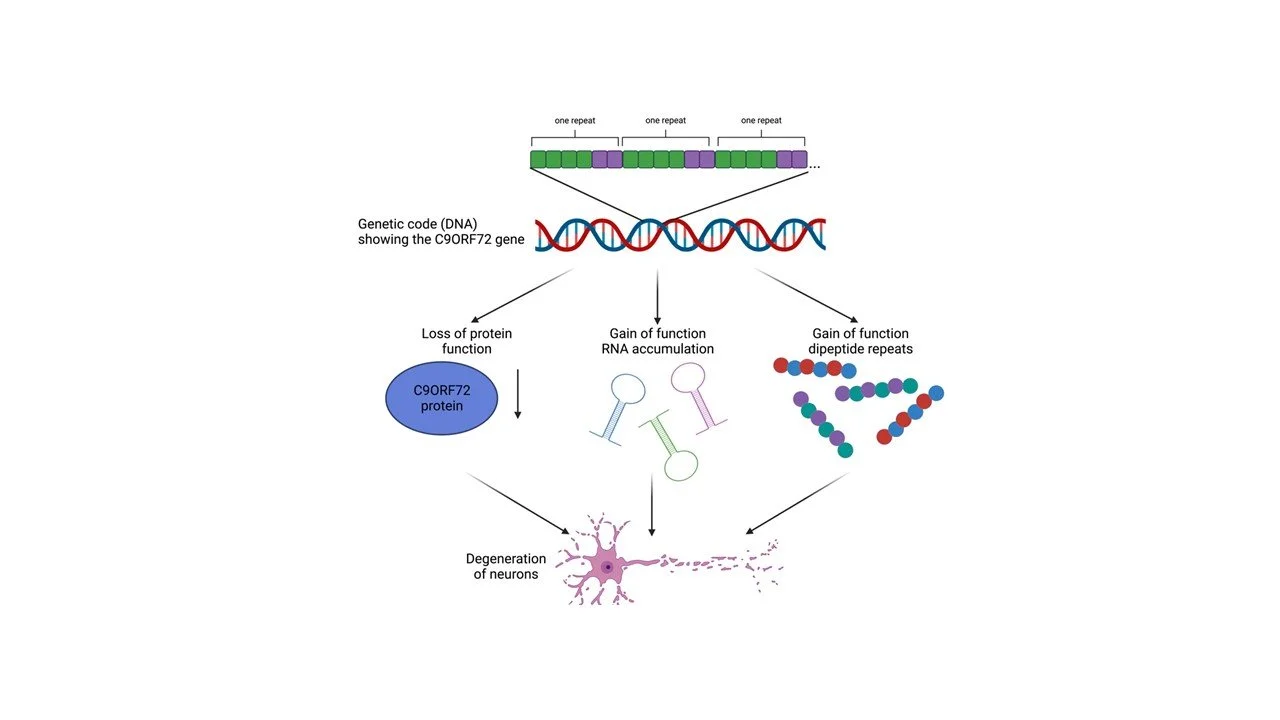
Figure 1: How expanded C9ORF72 repeats cause disease
Why is the study important?
A genetic change in the C9ORF72 gene formed of repeat expansions is the most common cause of both ALS and FTD and there is currently no cure for either. Removal of the repeats in the DNA could prevent death of cells and slow down or cure disease in patients.
What did the authors do and how did they do it?
The authors used a gene editing strategy to remove the repeats from the genetic code, therefore leaving the gene functional but removing the ability for the repeat to be copied into harmful RNA and dipeptide repeats.
What are the results?
Using specific guide DNA sequences from the region either side of the repeats and a system that cuts the DNA at specific points, called CAS9, the authors showed they could remove the repeats in a human cell line. They then repeated this in neurons grown from the brains of mice with the C9ORF72 repeat mutation. They proved the repeats were removed from the neurons and that the harmful RNA and dipeptide repeat proteins were consequently reduced.
Next, they moved onto mouse models with the C9orf72 expansion and using the same DNA editing system, they used a safe modified virus to deliver the treatment to the CNS of mice. Analysis of tissue from the mice 8 weeks after the injections showed that the repeat had been removed from the DNA, along with the reduction of RNA and protein accumulation in certain parts of the brain.
Finally, they used patient cells that originated as immune cells but were reprogrammed to be neurons. These cells were treated with the same modified virus delivery system and the guide DNA, and it was shown that the repeats were removed, and the levels of harmful dipeptide repeat proteins were also reduced.
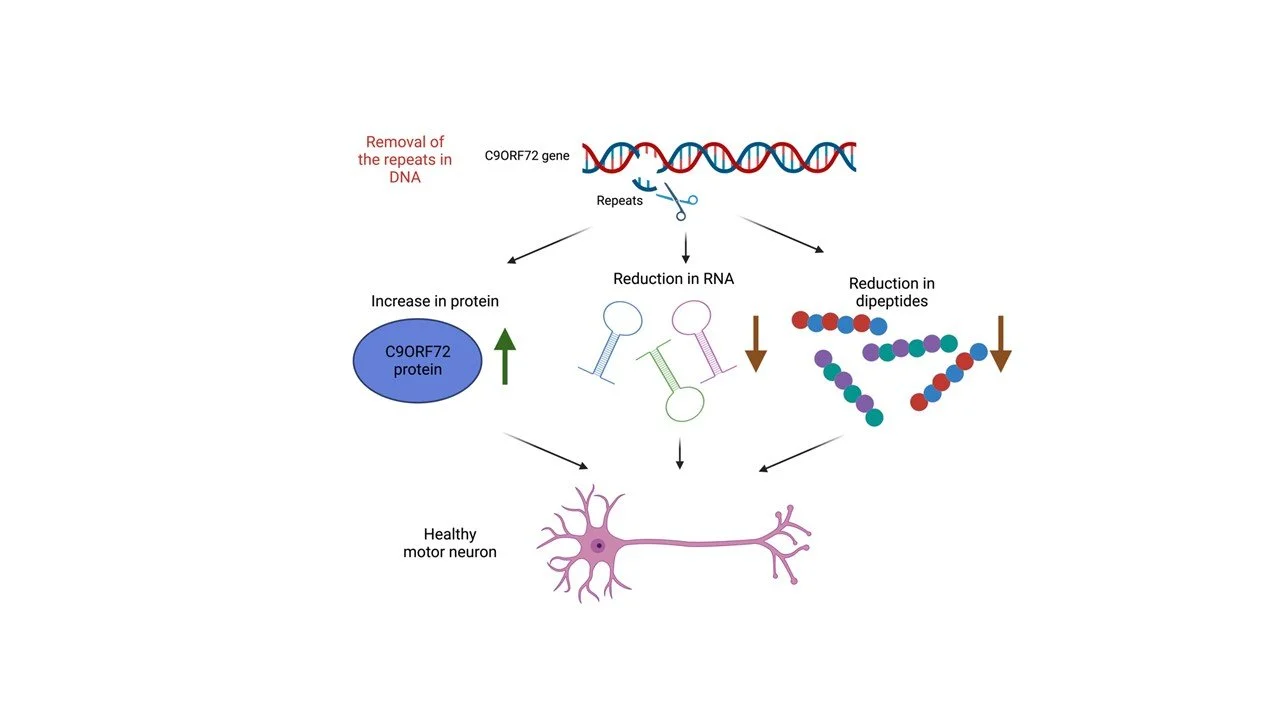
Figure 2: Results of the study.
What do the finding mean going forward for people with the disease?
Removal of the repeat from the DNA might be better than trying to combat the downstream effects, such as trying to reduce the amounts of RNA and dipeptide repeats using other methods. Removal of these harmful molecules has the potential to stop progression of disease in patients.
This study can be found at https://www.nature.com/articles/s41467-022-33332-7
Paper title: CRISPR/Cas9-mediated excision of ALS/FTD-causing hexanucleotide repeat expansion in C9ORF72 rescues major disease mechanisms in vivo and in vitro
Author list: Katharina E. Meijboom, Abbas Abdallah, Nicholas P. Fordham, Hiroko Nagase, Tomás Rodriguez, Carolyn Kraus, Tania F. Gendron, Gopinath Krishnan, Rustam Esanov, Nadja S. Andrade, Matthew J. Rybin, Melina Ramic, Zachary D. Stephens, Alireza Edraki, Meghan T. Blackwood, Aydan Kahriman, Nils Henninger, Jean-Pierre A. Kocher, Michael Benatar, Michael H. Brodsky, Leonard Petrucelli, Fen-Biao Gao, Erik J. Sontheimer, Robert H. Brown, Zane Zeier & Christian Mueller
Publication details including date of publication: Nature communications, October 2022.